 Kindness and manners
House rules for kids: how to write family rules that stick
How to write house rules for kids that work: how many to pick, how to word them, examples by age, fair consequences and when to change the rules as kids grow.
 The Kidventures team
In short
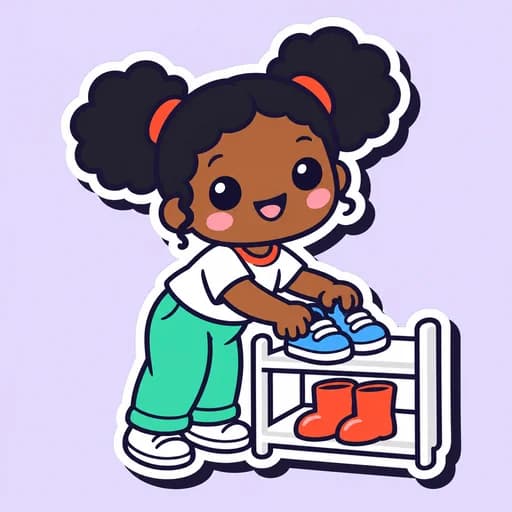
Good house rules are few, positive and visible: "We put shoes on the rack" works better than a list of "don'ts". Agree on 3 to 5 rules together, explain why each one matters, decide the consequence in advance, and make sure every adult applies them the same way.

Try this week with your kids
Noki suggests a first week of quests and rewards for your kids. You change what you like before you start.
On this page
Good house rules are few, positive and visible. "We put shoes on the rack" works better than a long list of "don'ts". Agree on 3 to 5 rules together, explain why each one matters, decide the consequence in advance, and make sure every adult applies them the same way.
That sounds simple, and it is. The hard part is resisting the urge to write 15 rules on a Sunday evening after a chaotic week. Here is a method that keeps the list short and makes it last.
How many house rules should a family have?
Fewer than you think. The US Centers for Disease Control and Prevention (CDC) describes a family rule as "a specific, clear statement about behaviors you expect from your child", and notes that toddlers and preschoolers can only learn and remember 2 to 3 rules at a time (CDC). The CDC suggests adding a new rule only once the current ones are followed consistently.
Older children can handle a few more, but the same logic applies. A good target for most families:
- 2 or 3 rules with toddlers and preschoolers
- 3 to 5 rules with school-age children
- 4 to 6 rules with preteens, some of them negotiated together
If a rule rarely gets broken, you probably do not need it on the list. Keep the list for the moments that cause friction every week: shoes and coats at the door, screens, kind words, getting ready in the morning.
How do you word a rule so kids follow it?
Wording does a lot of the work. 4 tips:
- Say what to do. "Walk inside" tells a child what you want; "Don't run" only tells them what to stop. The CDC suggests pairing each "no" with the behaviour you want instead.
- Be specific. "Be good" or "be respectful" means little to a 5 year old. "We use kind words, even when we are angry" is clearer.
- Use "we". "We put plates in the dishwasher after dinner" includes the adults, which makes the rule feel fair.
- Give the reason. A rule with a short why is easier to accept: "We put shoes on the rack, so nobody trips in the hallway."
Write the rules together at a calm moment, ideally at a family meeting. Children who help write a rule are more likely to remember it, and they often suggest firmer rules than you would.
Which rules fit toddlers, school-age kids and preteens?
The same few themes come back at every age: safety, kindness, looking after shared spaces, and screens. What changes is how much the child can manage alone.
| Age | Example rules | Tips |
|---|---|---|
| 2 to 4 | We hold hands in the car park. We use gentle hands. Toys go back in the box before dinner. | 2 or 3 rules, with a picture for each one |
| 5 to 8 | We put shoes on the rack. We say sorry and make it right. Screens go off when the timer rings. | Add the reason and the consequence next to each rule |
| 9 to 12 | We ask before borrowing. Phones charge in the kitchen at night. We tell an adult where we are. | Negotiate some rules together and review them each term |
Many of these rules match everyday jobs in the chore library, such as putting your shoes away, saying sorry and making it right or asking before borrowing. Turning a rule into a small daily habit is often easier than enforcing it as a ban.
How do consequences work with house rules?
A rule without a consequence is a wish. The CDC recommends that consequences be clear to you and your child and given immediately, and that the same consequence apply whether the rule was broken on purpose or by forgetting.
The American Academy of Pediatrics (AAP) adds a few useful guardrails (HealthyChildren.org):
- Calmly and firmly explain the consequence in advance, then follow through.
- Never take away something a child truly needs, such as a meal.
- Notice good behaviour and point it out, praising success and good tries.
- Do not spank or hit. Yelling and shaming do not work and can harm a child's emotional health.
The best consequences are linked to the rule. If bikes are left in the driveway, the bike stays in the garage tomorrow. If the screen does not go off when the timer rings, there is no screen the next day. Our guide to screen time rules has more examples for the rule families argue about most, and when kids refuse to do chores explains natural and logical consequences by age.
Write each consequence next to its rule. The CDC suggests a chart with 2 columns, 1 for the rules and 1 for the consequences, posted where everyone passes, such as the fridge, with pictures for children who cannot read yet. HealthLink BC, a service of the British Columbia health ministry, offers a simple family rules form built on the same idea: a rule, its consequence, and a family that agrees to follow them.
Should rules be the same for all siblings?
The core rules should be the same for everyone, adults included. "We use kind words" applies to a 4 year old and a 12 year old alike. What can differ is the detail: bedtime, screen limits and how much a child manages alone depend on age.
Explain the difference openly: "Your brother goes to bed later because he is 11. When you are 11, you will too." Children accept different rules more easily when the reason is age, and when they can see that their turn will come. Our guide to sibling harmony covers fairness between brothers and sisters in more depth, and our chore chart for multiple kids shows how to split jobs by age.
Consistency between adults matters even more than consistency between children. The CDC notes that a child's behaviour will be better if all caregivers support the rules in the same way. Share the written list with grandparents, babysitters and anyone who looks after your children regularly. The AAP gives the same advice: partners, family members and child care providers should agree on the basic rules.
When do you change the rules?
Rules should grow with your children. Review the list:
- When a rule is followed without reminders for a few weeks. Celebrate, then retire it or replace it with the next challenge.
- When a rule keeps failing. It may be too vague, too hard for your child's age, or missing a clear consequence. Rewrite it together.
- When life changes. A new school, a new sibling, a first phone or a move often calls for 1 new rule.
- At the start of each school term. A short review keeps the list alive instead of fading on the fridge.
A rule your children helped revise is a rule they own. Older children can propose changes and argue their case, which is good practice for negotiation and responsibility.
A short checklist
Before you post your house rules, check that each one:
- Says what to do, in positive words
- Is specific enough for your youngest child to understand
- Comes with a short reason
- Has a consequence decided in advance
- Is applied the same way by every adult in the house
With Kidventures, a rule like "shoes on the rack" or "screens off when the timer rings" can become a daily quest, so children earn a star for the habit instead of hearing the same reminder every evening. For more ideas on everyday courtesy at home, explore our manners guides.
Questions parents ask
What are examples of house rules for kids?
Short, positive rules about the moments that cause the most friction: "We put shoes on the rack", "We use kind words", "We ask before borrowing", "Screens go to bed at 7 pm". Pick the 3 to 5 that matter most in your home and adapt the wording to your child's age.
How many rules should a 4 year old have?
Very few. The US Centers for Disease Control and Prevention notes that toddlers and preschoolers can only learn and remember 2 to 3 rules at a time. Add a new rule only once the current ones are followed most of the time.
Should we write the rules down?
Yes. Post them where everyone passes, such as the fridge, with the consequence next to each rule. Use pictures for children who cannot read yet. A written list also helps grandparents and babysitters apply the same rules.
Sources
- US Centers for Disease Control and Prevention. Tips for creating rules.
- American Academy of Pediatrics. What's the best way to discipline my child? HealthyChildren.org.
- HealthLink BC, British Columbia Ministry of Health. Family rules form.